When designing lighting solutions, emergency lighting is a key priority for any commercial building, regardless of the business.
Not only does emergency lighting help businesses and customers navigate stressful and dangerous situations such as fires or power cuts, but in the UK, businesses are obligated to conform to UK emergency lighting regulations to keep everyone safe.
Throughout this article, we will provide a brief overview of emergency lighting regulations in the UK.
Understanding UK Lighting Regulations
What Buildings Need Emergency Lighting?
Almost all commercial and industrial buildings in the UK are obligated to have emergency lighting installed and maintained. However, these regulations only apply to commercial, industrial, and retail properties and do not apply to privately owned residential buildings.
Specifically, as outlined in the British Standard BS 5266-1:2016, any building that customers can access or where employees work must have appropriate emergency lighting installed, and all emergency lighting systems must be tested regularly.
Who Is Responsible For Ensuring Emergency Lighting is Installed and Maintained?
Under UK legislation, specifically the Regulatory Reform (Fire Safety) Order 2005, every premises will have a designated ‘Responsible Person’ to ensure that adequate emergency lighting is installed.
This person is responsible for ensuring that a fire risk assessment and evacuation plan are in place and that appropriate emergency lighting is installed.
The responsible person must also ensure that all building occupants are aware of any necessary evacuation training and can use emergency lighting to ensure everyone remains safe.
Generally, it is recommended that the nominated responsible person works with an appropriately qualified electrician or with a fire safety specialist to ensure that their plans are appropriate and do not expose the building or its occupants to any undue risk.
What Legislation Governs Emergency Lighting Regulations in the UK?
In the UK, there are five primary pieces of legislation that govern emergency lighting regulations. These pieces of legislation are:
- The Regulatory Reform (Fire Safety) Order 2005
- The Building Regulations Act 2010: Part B
- British Standard BS 5266-1:2016
- Health and Safety (Safety Signs and Signals) Regulations 1996
- Workplace (Health, Safety and Welfare) Regulations 1992
These regulations set out requirements for adequate emergency lighting from multiple perspectives.
For example, the Health and Safety Regulations and the Workplace Regulations are in place to protect employees and customers from potential harm in the event of an emergency. On the other hand, the Building Regulations Act creates a basic safety standard for all new and existing buildings.
Between these pieces of legislation, the UK has a robust standard for emergency lighting that is in place to ensure that all buildings are safe places to work.
Where Does Emergency Lighting Need to Be Installed?
In line with relevant legislation, emergency lighting must be installed in areas where a lack of lighting could cause injury or prevent evacuation.
This primarily means stairwells, corridors, intersections within corridors, and points where the floor level changes. In addition, emergency lighting is required in toilets that are larger than 8m2 and anywhere the direction toward an emergency exit changes.
How Long Does Emergency Lighting Need to Last?
Emergency lighting requirements cover two different evacuation scenarios: those where occupants can evacuate rapidly, and those where they cannot.
For areas where evacuation is expected to take longer, such as hotels, hostels, or anywhere else where people may be impaired by sleep or other situations, emergency lighting needs to last for a minimum of 3 hours.
For areas where people are expected to evacuate rapidly, such as retail stores, emergency lighting needs to last for a minimum of 1 hour.
What Emergency Lighting Do I Need?
During an emergency, multiple types of lights can provide benefits. Below, we have outlined some of the most common types of emergency lighting and how they are used.
Escape Route Lighting
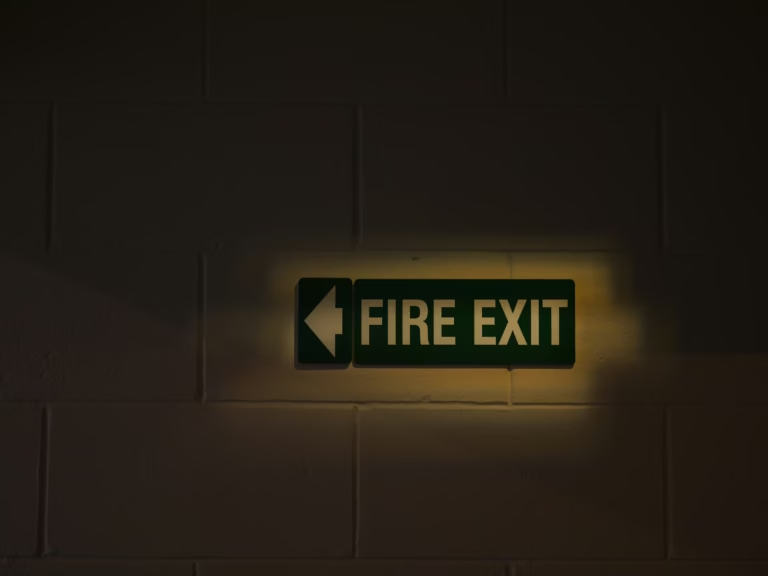
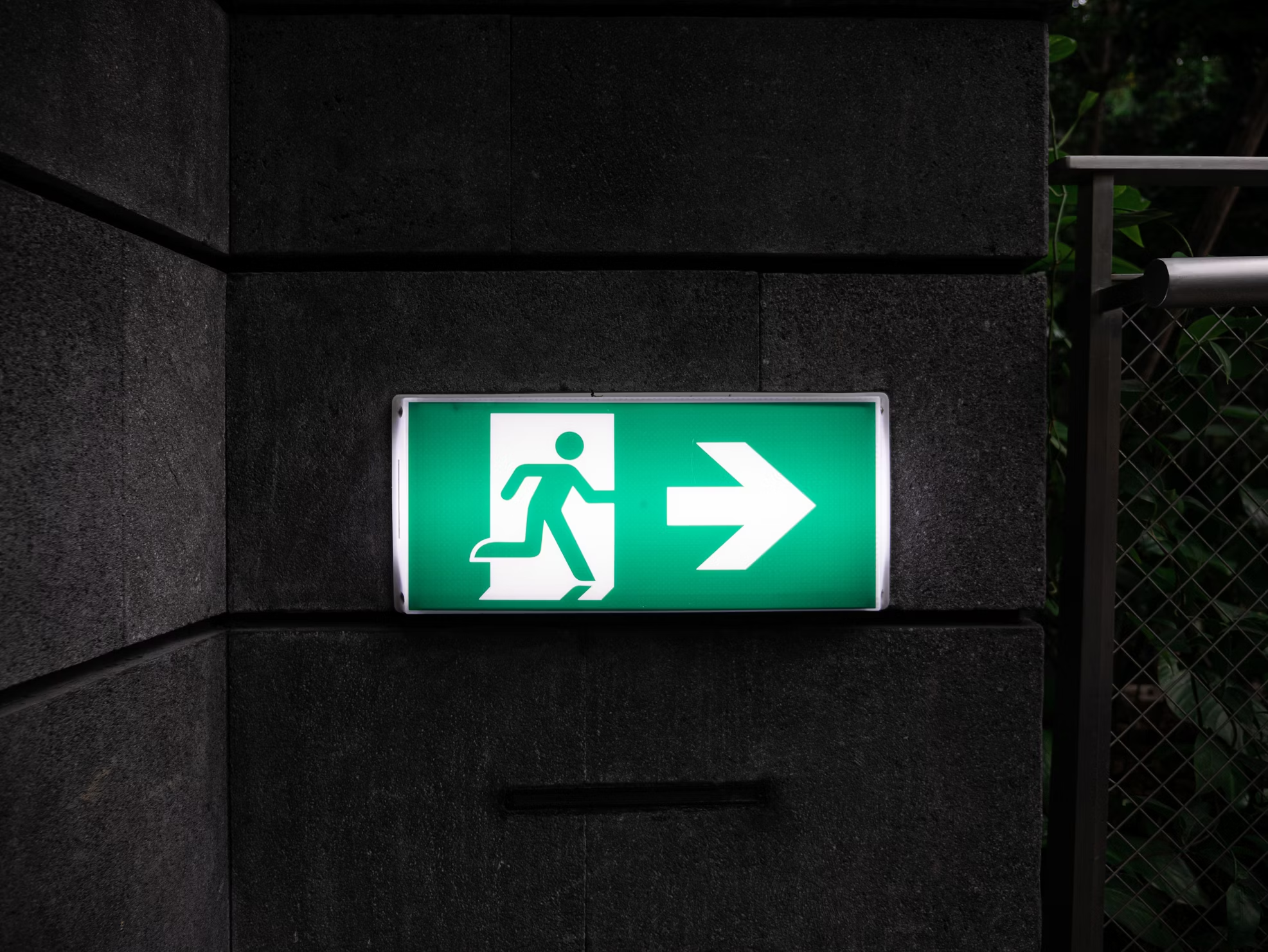
The most apparent form of emergency lighting, escape route lighting, helps illuminate the path to fire escapes to ensure that occupants can escape in an orderly fashion. Escape route lighting should also highlight any potential obstacles to ensure that occupants can navigate around them.
A good choice for escape route lighting would be LED Downlight Emergency Lights, our range of fire-rated downlights designed to provide a focused, downward beam to illuminate an escape route or path.
Open Area Lighting
Open area lighting is emergency lighting that illuminates a wide area to allow people to continue to see, even in an emergency. Open area lighting primarily serves to reduce panic, as groups of people will often start to feel uneasy if they cannot see clearly. Ensuring good quality lighting in emergencies allows everyone to remain calm and continue the evacuation process in an orderly fashion.
An excellent option for emergency open area lighting is our emergency LED Bulkheads. These provide a wide profile, allowing a larger range of light dispersion in emergencies and uniform lighting even in critical situations.
High-Risk Task Area Lighting
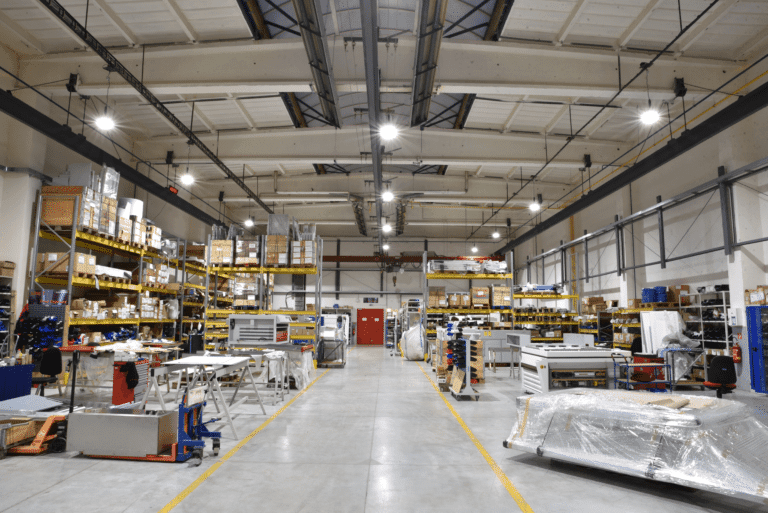
High-Risk Task Area Lighting provides illumination in areas that could be particularly dangerous during an emergency. This includes areas with potentially hazardous implements, like a kitchen or warehouse floor, and areas that could be critical in an emergency, such as fire extinguishers, hoses or first aid kits. Ensuring that danger and assistance can be identified quickly and efficiently is paramount, especially during an emergency.
Multiple ways to provide emergency lighting to critical areas include downlights and bulkheads. However, our LED Twin Spot Emergency Lights provide some of the most robust lighting solutions, especially in critical areas. As they are battery-powered, weatherproof and dust-tight, twin spot emergency lights are the perfect solution for a location that cannot be allowed to go dark.
Standby Lighting
Standby lighting ensures critical operations can continue, even during an emergency. For example, an emergency standby light in a surgical operating theatre: if the lights were to go off suddenly, the person receiving surgery could die as a result. Theatres are therefore equipped with standby lighting to ensure that critical, potentially life-saving processes are not interrupted by a lighting failure.
Browse Our Range Of Emergency Lighting At LED & Power
At LED & Power, we provide robust lighting solutions for industrial, commercial and retail properties. Browse our emergency lighting solutions today to find the perfect illumination for your property and guarantee balanced, adjustable lighting, even in emergency situations. If you have any questions or queries about our products or are considering purchasing lighting equipment in bulk, please contact our team. We will be happy to answer any queries or help you put together an order that will help upgrade and elevate your lighting solutions.