How do LED Lights Help the Environment?
In today’s commercial landscape, sustainability has evolved from a corporate social responsibility (CSR) buzzword to…
Read articleSports Sector — Sports Halls
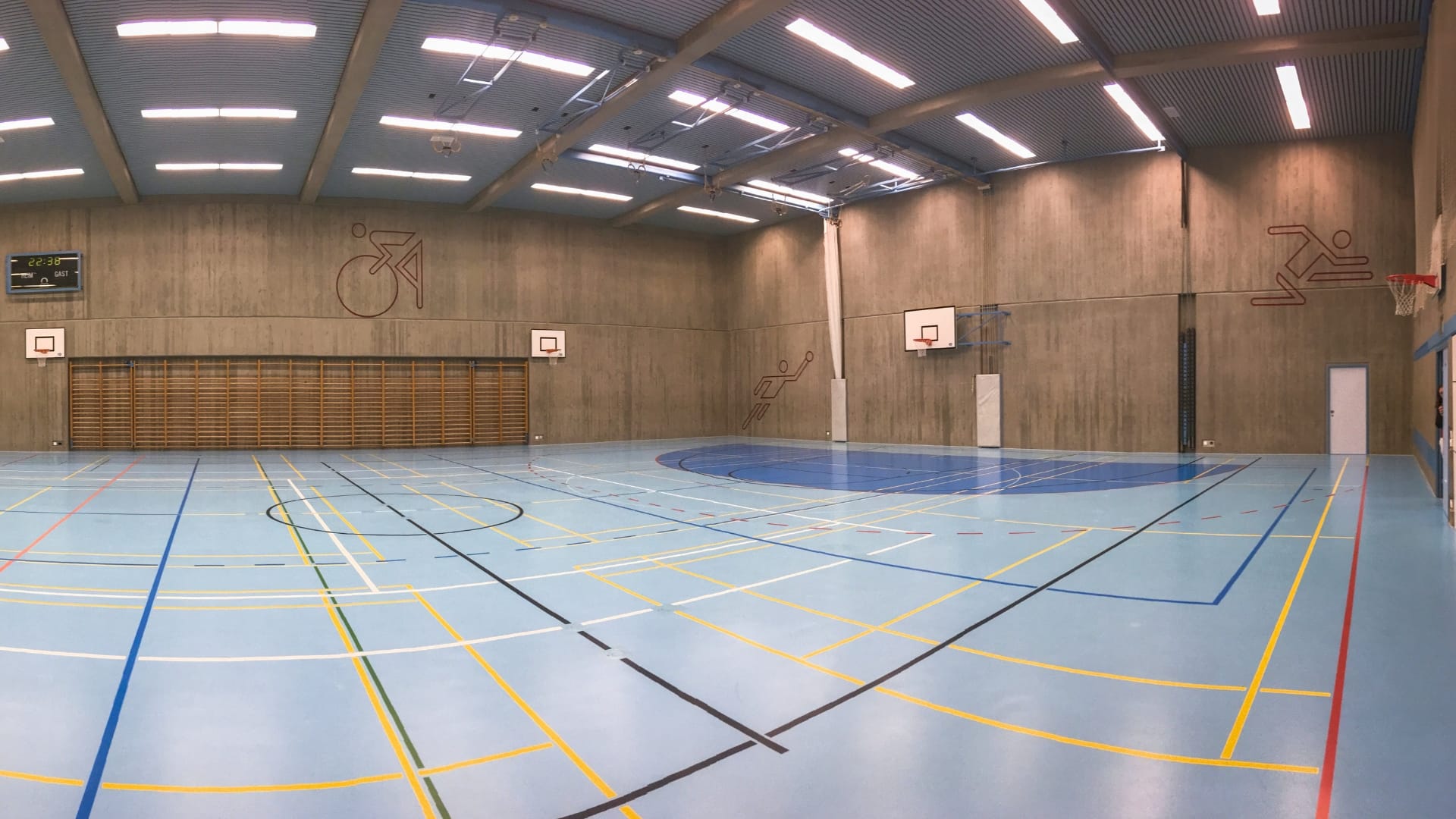
Low-Glare Lighting for Sport Halls
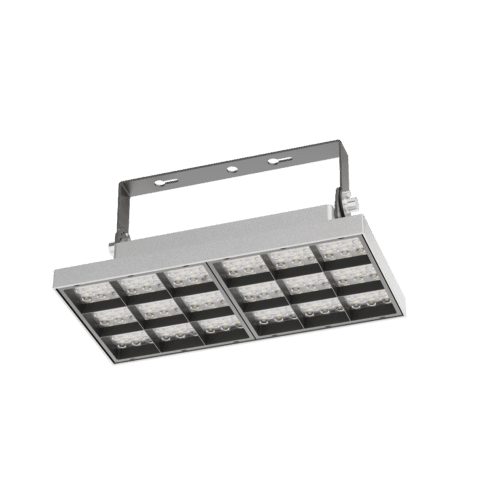
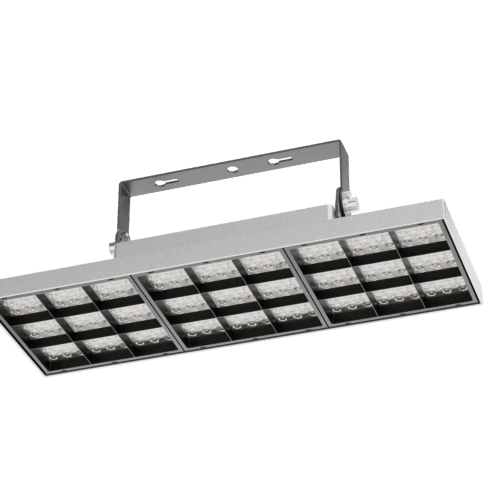
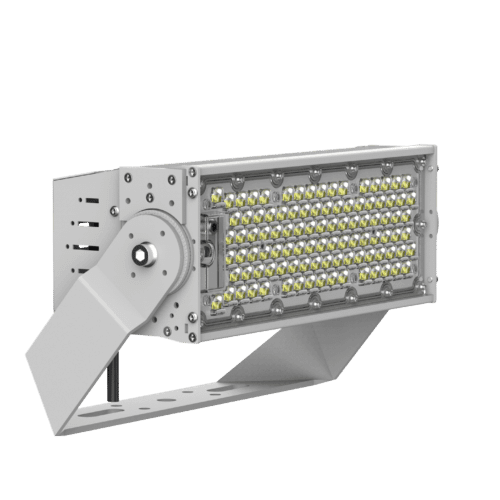
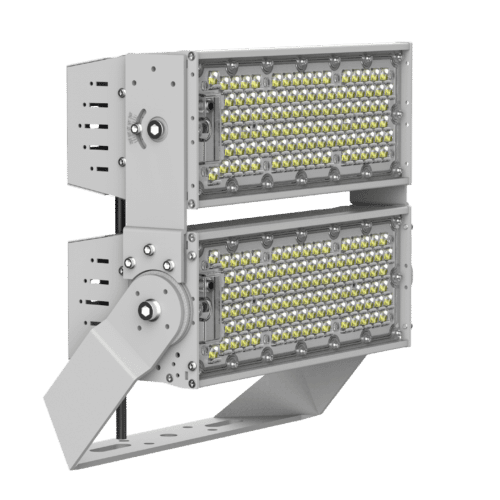
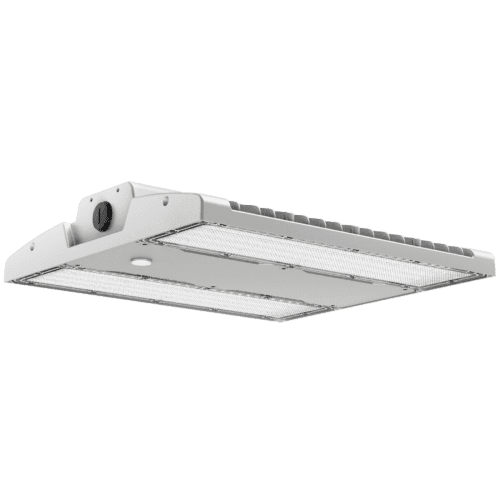
We design sports hall lighting systems for schools, councils, leisure centres and commercial venues across the UK. Built for indoor halls and MUGAs, our range uses low-glare LED high bays and linear fittings that meet Sport England and BS EN 12193 standards, with IK10 ball-proof housings, flicker-free drivers and high CRI. Upgrading to LED can cut energy costs by up to 60% against fluorescent or metal halide, with brighter, more uniform light and far lower maintenance.
Exclusive trade pricing, dedicated account management and priority stock allocation — set up your account in minutes.
Why choose us
With years of experience supplying and designing indoor sports lighting across the UK, we help sports hall owners get the lighting right the first time. We specify only proven, premium LED fittings, the best lights in the industry, and put them in the right places using full lux and layout calculations to Sport England and BS EN 12193 standards. From your first enquiry to the final fitting, you get expert support, honest advice and a system designed around the sports played in your hall, your ceiling height and your budget.
Showing 1–5 of 5 results
Lighting standards
The table below shows recommended lighting levels for the hall and the ancillary spaces in a sports facility, based on Sport England guidance and BS EN 12193 (sports lighting) for the playing area, and EN 12464-1 for circulation and support areas.
CIBSE SLL Code for Lighting – recommended values for sports hall led lights environments
Source: Sport England Artificial Sports Lighting guidance, BS EN 12193 (Light and lighting, sports lighting) and EN 12464-1 for circulation and support spaces. Indoor sports areas use the Unified Glare Rating (UGR) method. The IK rating shown is the impact rating, which matters more than IP indoors, since fittings must be ball-proof. Individual sports and their governing bodies may set specific requirements, badminton in particular. Values are a guide only. Speak to our lighting designers for site-specific calculations.
Our Service
Our specialists design and deliver a lighting scheme tailored to your hall and the sports played in it. We balance light quality, uniformity and glare control with your energy and budget targets, so you get a system that performs in play and costs less to run.
We assess your hall dimensions, ceiling height, existing fittings, the sports played and whether the hall is sub-divided for training.
We produce a DIALux lux plan with fitting positions, wattages and predicted light levels across the hall.
We confirm maintained illuminance, uniformity and UGR glare control for your sports, including ball-proof fitting selection.
A transparent, no-obligation quote with trade pricing applied where relevant.
Your fittings picked, packed and delivered across the UK, free over £200.
Common questions
Everything you need to know about LED lighting for your sports hall led lights.
In the UK, sports hall lighting follows Sport England guidance and BS EN 12193. General recreational use, PE and training need around 300 lux, club competition around 500 lux, and national or high-level competition 750 lux or more, with televised events higher again. Individual sports set their own minimums, with badminton being particularly demanding on glare. The total area around the courts should be lit to roughly 75% of the level on the principal playing area.
Several things. The sports being played and their individual standards, the mounting height and how it affects glare, uniformity across the whole hall, and impact resistance, since balls and shuttlecocks regularly strike fittings. You also need to consider whether the hall is sub-divided for training, whether matches are filmed, which calls for flicker-free drivers and vertical light, and how the system will be dimmed and controlled for different activities. We factor all of this into your free lighting design.
The best lighting for a sports hall is LED high bay or linear fittings with low-glare diffusers and IK10 impact-rated housings. A colour temperature of 4000K to 5000K, a high CRI above 80 and flicker-free drivers give clear, comfortable visibility for fast sports. Dimmable fittings let you switch between match mode and training mode, cutting energy use. The right fitting depends on your ceiling height and the sports played, which is why we design every scheme individually.
For a multi-use school sports hall, low-glare LED high bays or linear high bays with IK10 impact protection are the best choice. They handle everything from PE and assemblies to badminton, basketball and five-a-side, and dimming lets staff drop to lower levels for exams or events. Look for ball-proof housings without bulky wire cages, high CRI and flicker-free operation for clear CCTV. We work with schools, councils and contractors, and can supply on a trade account.
This depends on the hall size and target lux level. As a rough guide, a standard four-court sports hall lit to 300 lux needs in the region of 300,000 to 500,000 lumens in total, rising significantly for competition levels of 500 to 750 lux. The precise figure comes from the photometric design, which calculates the number and output of fittings needed for even coverage. We produce this for you free of charge.
Not usually. A sports hall is a dry, indoor environment, so a standard IP20 rating is generally sufficient for the main hall. The more important rating is the IK, or impact, rating. Fittings should be IK10 rated to survive direct hits from basketballs, footballs and shuttlecocks. Wet or humid areas such as poolside or some changing facilities are the exception and need higher IP ratings such as IP65.
This is a broadcast-focused principle rather than a fixed regulation. It refers to lighting the hall so a person at roughly average height, around 5 feet 7 inches, is well lit from any angle. In practice it means designing for vertical illuminance, not just horizontal lux on the floor, so faces, kit and the ball or shuttlecock stay clearly visible for players, spectators and any CCTV or broadcast cameras. We factor vertical illuminance and glare control into halls where filming or higher-level competition takes place.
Our work
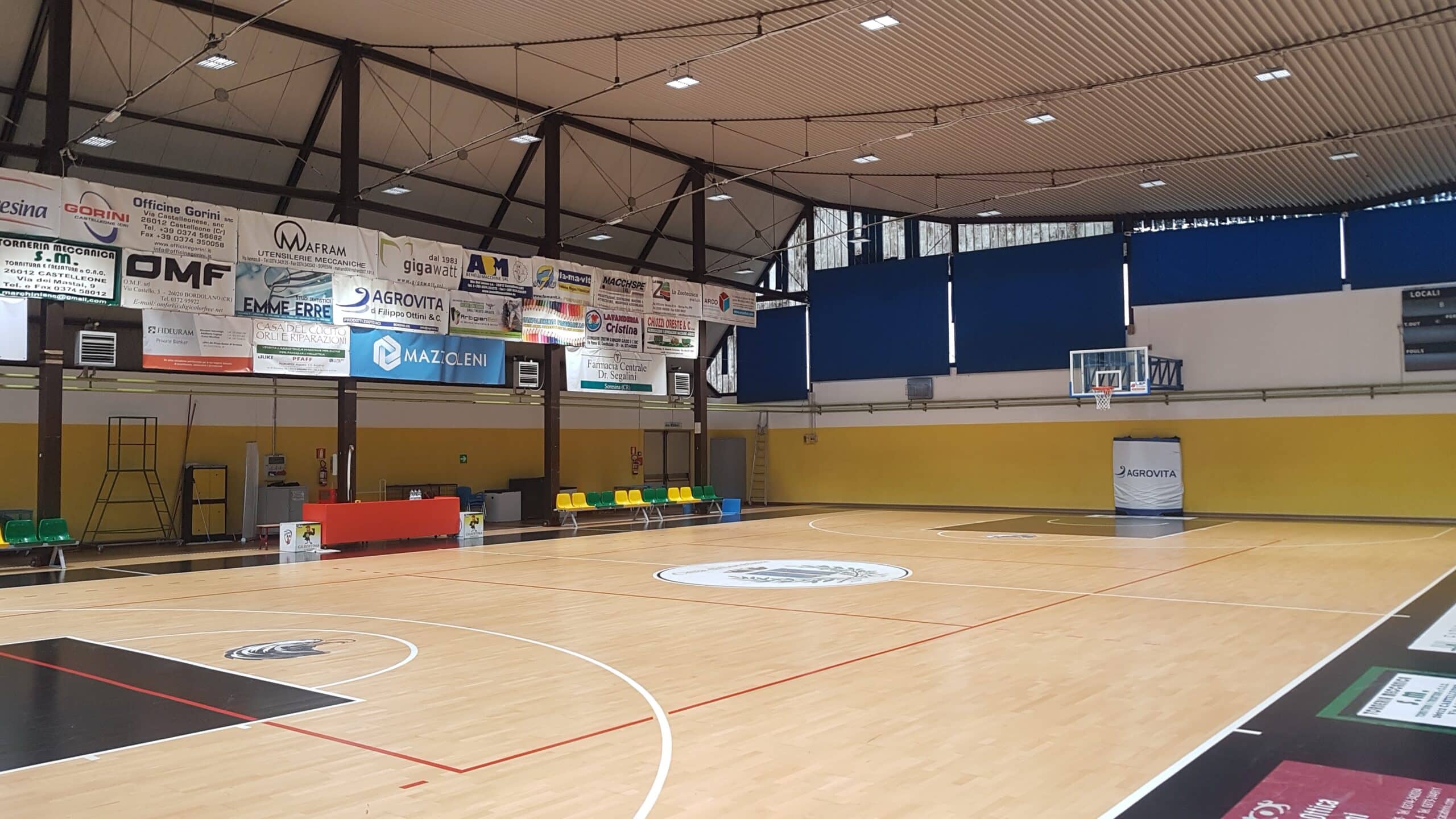
A selection of recent sports hall led lights lighting projects we’ve supplied and installed.

Insights & advice
Get started
Tell us about your site and our team will recommend the right fittings, provide a free lighting design and a tailored quote.